Hints & Tips
Partition Walls for Commercial Spaces: Options and Benefits
January 27, 2026
3mins
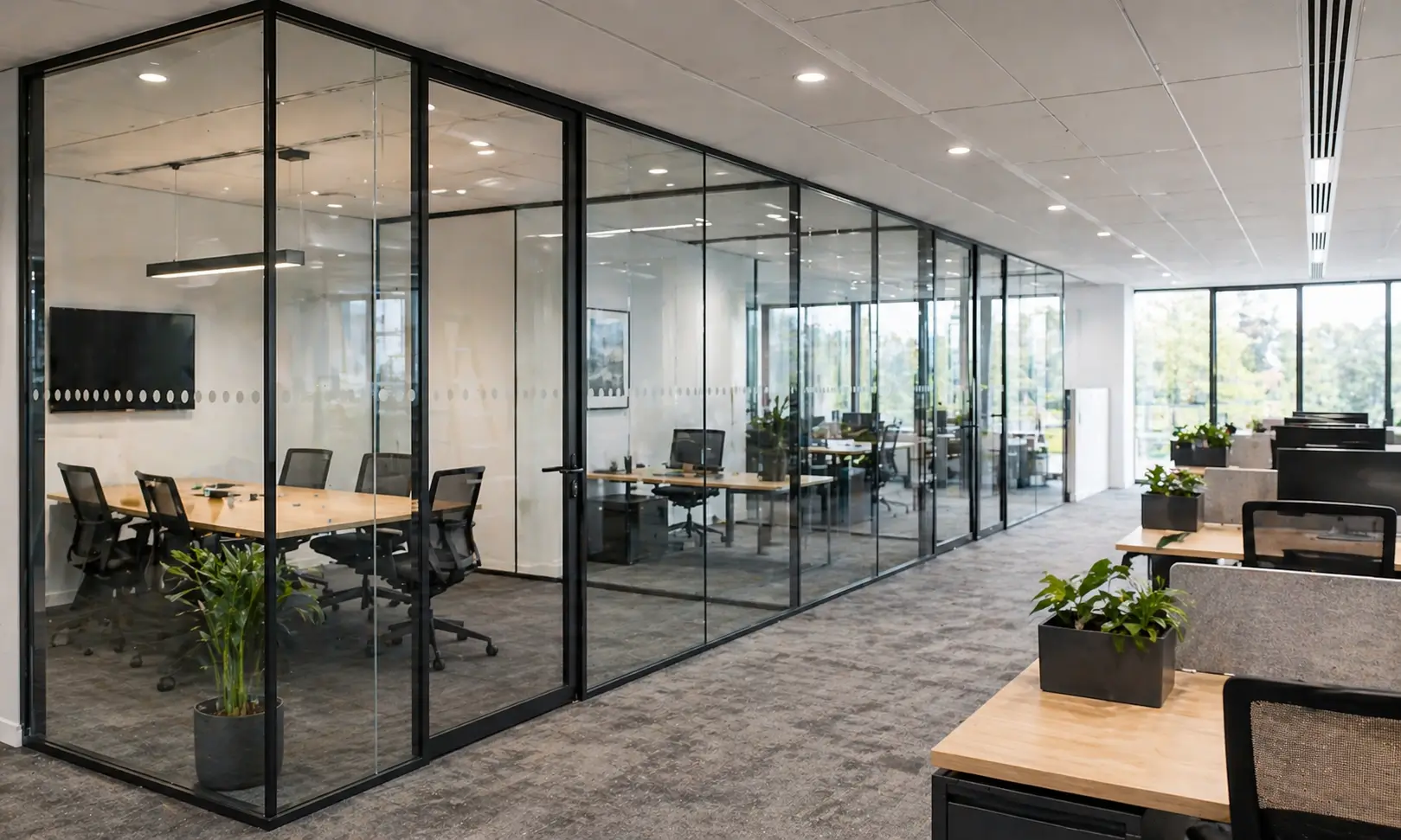
Glass partitions have become a popular choice in modern office design. They offer a clean, open feel while still allowing businesses to divide space into practical working areas.
This guide explains the benefits, potential drawbacks, and key design considerations when choosing glass partitions for an office environment.
Glass partitions are internal walls made from toughened or laminated glass, often framed with aluminium or installed as frameless systems. They are used to create meeting rooms, private offices, and breakout spaces without blocking light or visibility.
They are commonly used in offices where both openness and structure are needed.
Glass allows light to travel through the space, reducing the need for artificial lighting during the day. This can help create a brighter and more comfortable working environment.
Glass partitions give offices a clean, professional look. They are often used in client-facing environments where presentation matters.
Unlike solid walls, glass keeps spaces feeling open while still providing separation. This works well in smaller offices or where a more open layout is preferred.
Many glass partition systems can be adjusted or reconfigured as business needs change, making them a practical long-term option.
Glass partitions can reduce visual privacy. Frosted films, blinds, or partial coverings can help, but this needs to be planned from the start.
Standard glass partitions do not block sound as effectively as solid walls. Acoustic glass or double-glazed systems can improve this, but they come at a higher cost.
Glass surfaces show fingerprints and marks more easily than plastered walls. Regular cleaning is needed to keep them looking presentable.
Glass partition systems are often more expensive than standard plasterboard partitions, especially when using frameless or acoustic options.
Consider where full transparency works and where some privacy is needed. Meeting rooms, for example, may benefit from frosted sections or film.
Frameless systems offer a minimal look, while framed options can provide a more defined structure. The choice should match the overall office design.
If noise control is important, plan for acoustic glass or additional insulation from the start rather than adding solutions later.
Glass doors should be positioned to allow easy access without interrupting workflow or creating awkward layouts.
Glass partitions are ideal where light and visibility are priorities. Solid partitions, such as drylined walls, are better suited where privacy, sound control, or fire resistance are required.
In many projects, a combination of both systems provides the best result.
Accurate installation is essential for glass partitions. Poor alignment or fixing can affect both appearance and performance.
Working with experienced installers ensures a clean finish, correct fitting, and compliance with safety standards.
If you are planning an office fit-out or refurbishment, BAL Drylining can help you choose the right partition solution for your space.
Contact BAL Drylining today to discuss your project and request a quotation.

Copyright © 2026. BAL Dry Lining. All rights reserved.