5 Signs Your Property Needs Drylining Work
Drylining creates smooth, insulated walls and ceilings quickly. It improves energy efficiency, fire performance, and finish quality. If your rooms feel cold, look tired, or repairs never seem to last, it may be time to bring in a drylining specialist.
1) Cold rooms, draughts, and high energy bills
If certain rooms are hard to heat or cool rapidly after the heating switches off, your walls may lack effective insulation. Drylining with insulated boards can cut heat loss, reduce cold spots, and lower bills.
2) Cracked, uneven, or blown plaster
Repeated cracking, hollow sounds when tapped, or flaking plaster suggest the existing finish has failed. Overboarding with new plasterboard and a skim creates a true surface that lasts longer than patch repairs.
3) Persistent damp staining or condensation on external walls
Brown marks, peeling paint, or mould at corners point to thermal bridging and moisture. After fixing the source of damp, an insulated drylining system with a vapour control layer helps keep internal surfaces warmer and drier.
4) Noisy rooms and privacy issues
Thin partitions transmit sound between rooms and flats. Upgrading with acoustic boards, resilient bars, and mineral wool inside stud walls improves privacy for bedrooms, home offices, and multi-occupancy properties.
5) Remodels that need a fast, clean finish
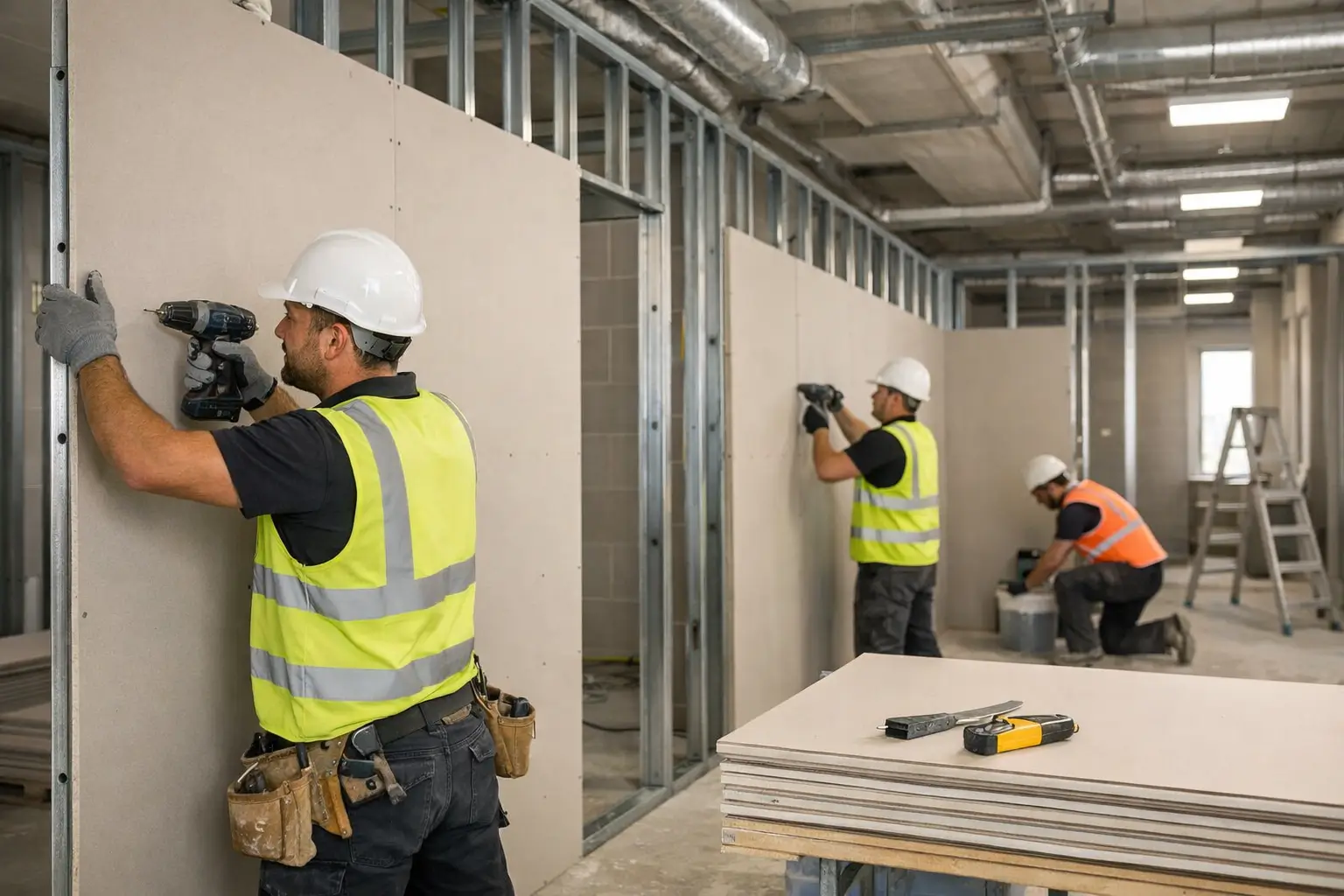
Extensions, garage conversions, and commercial fit outs often need services hidden and walls made good quickly. Drylining allows you to conceal cables and pipework, add access hatches, and achieve a paint-ready finish in days.
What to expect from a drylining project
- Survey and specification: assess substrates, moisture, and fire or acoustic needs.
- Preparation: fix the cause of damp, remove loose material, set out battens or metal studs.
- Boarding and taping: install plasterboard or insulated boards, tape joints, and skim where required.
- Finishing: sanding, mist coat, and sealant at perimeters for an airtight finish.
Choosing the right system
- Standard vs moisture resistant boards: use MR boards for kitchens and bathrooms.
- Insulated boards: combine thermal boards with a vapour control layer on external walls.
- Fire and acoustic upgrades: specify Type F or acoustic boards with suitable studs and insulation.
- Fixings and loadings: plan for radiators, cabinets, or TVs with pattresses and the correct anchors.
When to call a professional5-signs-property-needs-drylining
DIY patching can hide problems. If you suspect damp, structural movement, or need fire and acoustic performance signed off, bring in a drylining contractor. They will specify the right board type, cavity depth, and details around windows, sockets, and joins.
Next step: book a survey to confirm the cause of the issue and get a clear plan for insulation, boarding, and finishing that suits your property.